
In today’s digital environment, having a website is not enough. Your website needs to be fast, mobile-friendly, easy to navigate, and optimized for search engines so potential customers can find your business online.
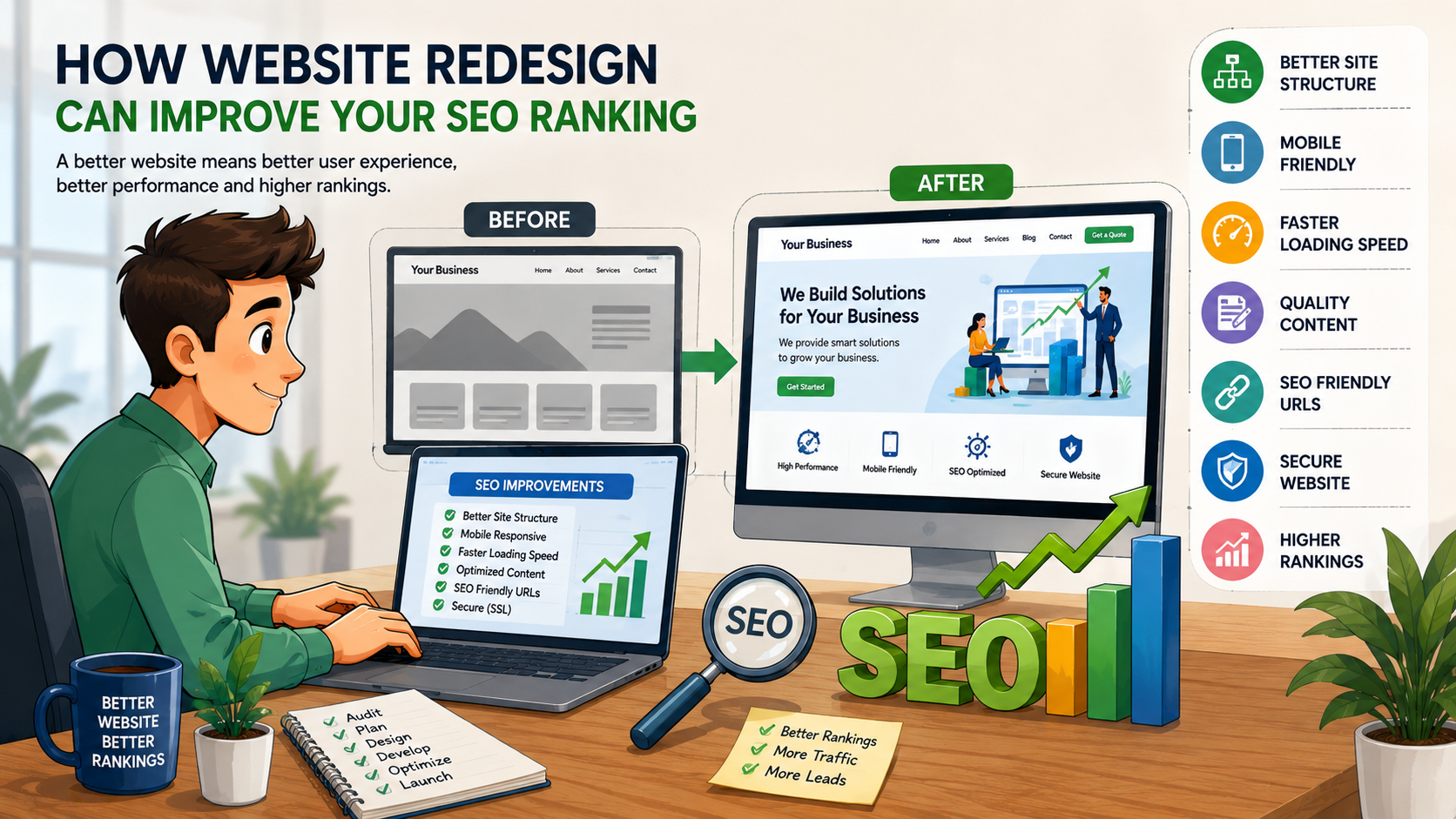
A website redesign is an excellent opportunity to improve your website’s SEO performance while creating a better experience for visitors. When properly planned, a redesign can strengthen your website structure, improve page speed, enhance mobile usability, and make your content easier for search engines to understand.
At Mugin Technologies, we help businesses redesign their websites with modern design, performance, user experience, and SEO best practices in mind.
What Is Website Redesign?
Website redesign involves improving an existing website’s design, structure, content, functionality, and performance.
A redesign can address issues such as:
· Outdated website design
· Poor mobile responsiveness
· Slow loading speed
· Difficult navigation
· Unoptimized content
· Poor website structure
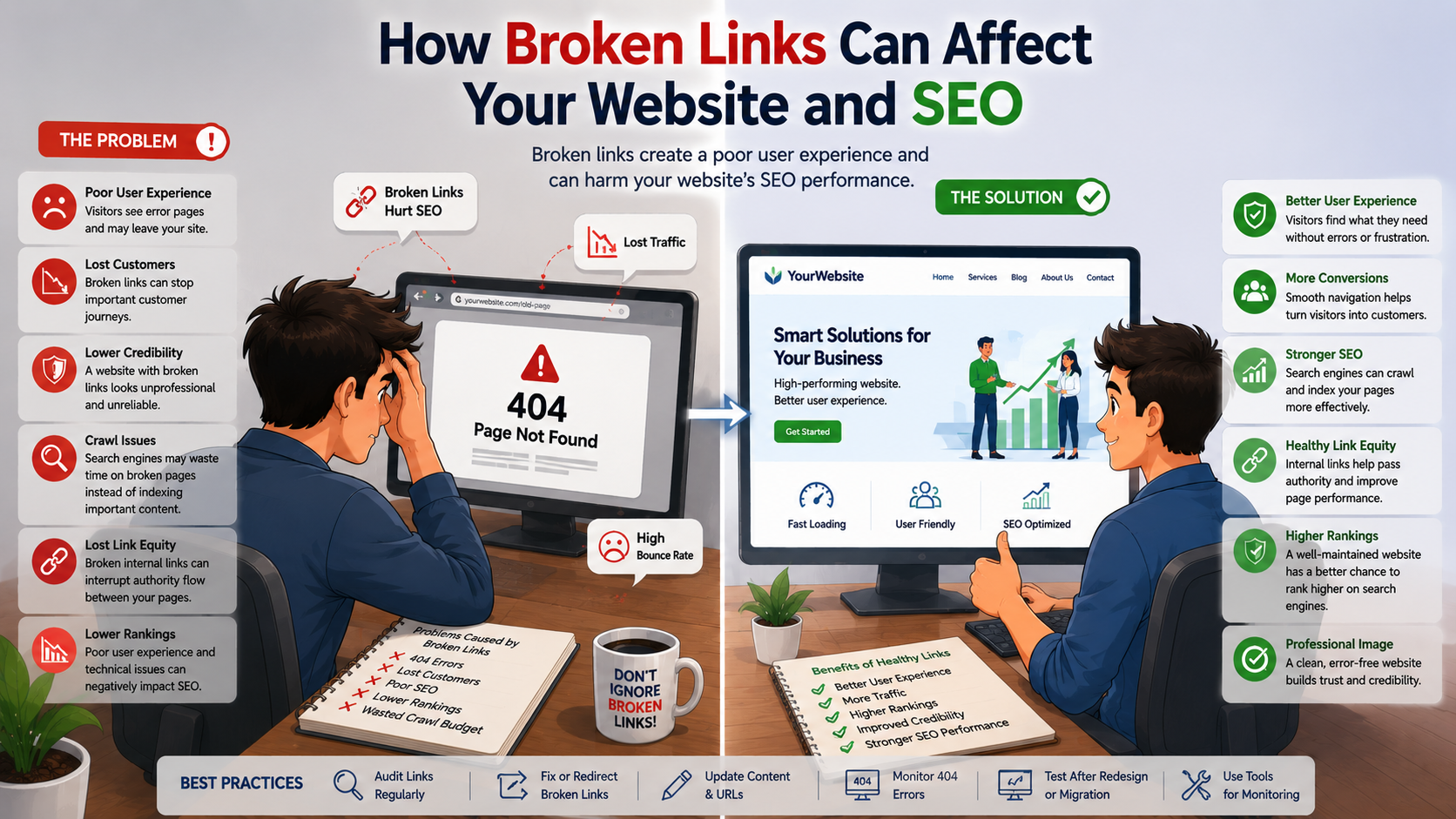
· Broken links
· Weak calls-to-action
· Technical SEO issues
Rather than simply changing the appearance of a website, a well-planned redesign focuses on creating a website that performs better for both users and search engines.
How Can Website Redesign Improve SEO?
1. Improve Website Structure
A clear website structure helps search engines understand the relationship between different pages.
During a redesign, you can organize your website into a logical structure with pages such as:
· Home
· About Us
· Services
· Products
· Portfolio
· Blog
· Contact Us
A well-organized structure also makes it easier for visitors to find the information they need.
2. Improve Mobile Responsiveness
A large number of users access websites through smartphones and tablets. If your website does not work properly on mobile devices, visitors may leave quickly.
A responsive redesign ensures that your website adapts to different screen sizes and provides a consistent experience across:
· Smartphones
· Tablets
· Laptops
· Desktop computers
Better mobile usability can contribute to a stronger overall search experience.
3. Increase Website Loading Speed
Website speed is an important part of user experience and technical website performance.
During a redesign, developers can identify and improve elements that may slow down the website, such as:
· Large image files
· Unnecessary scripts
· Outdated plugins
· Unoptimized code
· Excessive website elements
A faster website can provide a better user experience and help reduce visitors leaving before the page loads.
4. Create SEO-Friendly URLs
A redesign provides an opportunity to review your existing URLs and make them simpler and more meaningful.
For example:
Poor URL:
yourwebsite.com/page?id=123
Better URL:
yourwebsite.com/website-redesign-services
SEO-friendly URLs make it easier for users and search engines to understand what a page is about.
However, existing URLs that already receive search traffic should not be changed without proper planning. Appropriate redirects should be implemented when URLs are permanently changed.
5. Optimize Page Titles and Meta Descriptions
Each important page should have a relevant page title and meta description that accurately describe its content.
For example:
Page Title:
Website Redesign Services for Growing Businesses
Meta Description:
Improve your website’s design, performance, mobile experience, and SEO with professional website redesign services.
Well-optimized metadata can help search engines understand your pages and can make your search result more useful to potential visitors.
6. Improve Website Content
Website redesign is a good time to review your existing content.
Remove outdated information and improve pages that do not clearly explain your products or services.
You can strengthen content by:
· Targeting relevant keywords
· Creating useful service pages
· Improving headings
· Adding informative content
· Updating outdated information
· Answering customer questions
· Adding relevant internal links
Quality content helps your website provide useful information to visitors while giving search engines more context about your business.
7. Improve Internal Linking
Internal links connect different pages within your website.
For example, a blog about website redesign can link to your:
· Website development service
· SEO service
· Corporate website service
· Contact page
A good internal linking structure helps visitors discover relevant information and makes it easier for search engines to discover and understand pages on your website.
8. Optimize Images
Images can improve the visual quality of a website, but poorly optimized images can increase page loading time.
During a redesign, images can be optimized by:
· Compressing image files
· Using appropriate image formats
· Providing descriptive file names
· Adding meaningful alt text
· Using appropriately sized images
This can improve both website performance and accessibility.
9. Fix Broken Links and Technical Issues
An old website may contain broken links, missing pages, outdated scripts, or other technical problems.
A redesign gives you an opportunity to perform a complete website audit and identify issues such as:
· Broken internal links
· Missing pages
· Duplicate content
· Incorrect redirects
· Poor navigation
· Missing metadata
· Technical errors
Fixing these problems can create a cleaner and more reliable website.
Why Choose Mugin Technologies for Website Redesign?
At Mugin Technologies, we help businesses transform outdated websites into modern, responsive, and SEO-friendly digital platforms.
Our website redesign services include:
· Business website redesign
· Corporate website redesign
· Responsive website development
· UI/UX redesign
· SEO-friendly website development
· Website speed optimization
· Content and structure improvements
· Mobile optimization
· Website maintenance and support
· Custom web solutions
We focus on creating websites that are not only visually appealing but also designed to support business growth and online visibility.
Conclusion
A website redesign can be an excellent opportunity to improve your SEO ranking, website performance, user experience, and lead generation. From improving website structure and mobile responsiveness to optimizing content, URLs, images, and internal links, every part of the redesign can contribute to a stronger online presence.
However, SEO should be considered from the beginning of the redesign process. Proper planning, URL management, redirects, content preservation, and post-launch monitoring are essential for protecting existing SEO value.
If your website looks outdated, performs poorly, or struggles to attract organic traffic, it may be time to consider a professional website redesign.