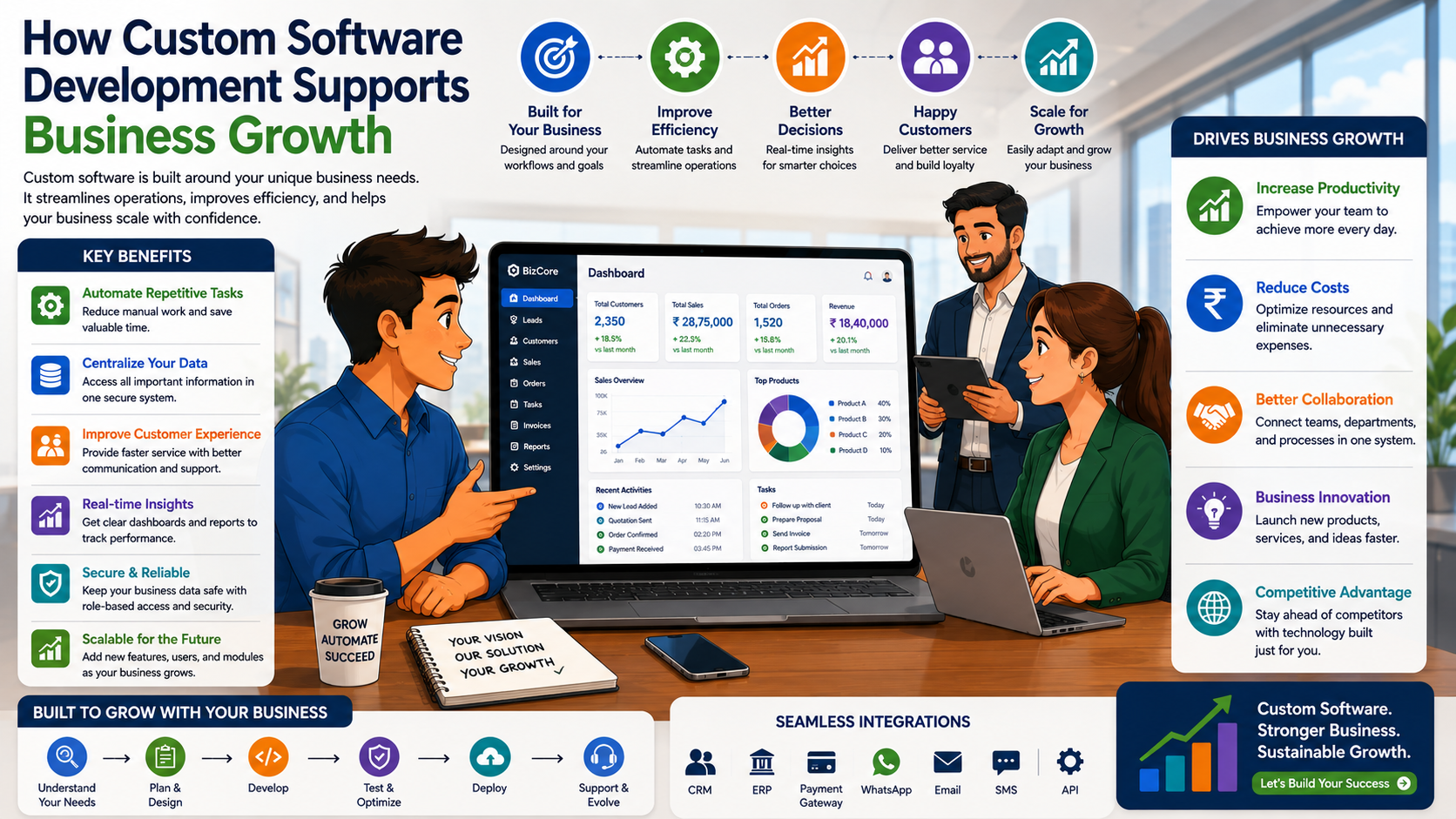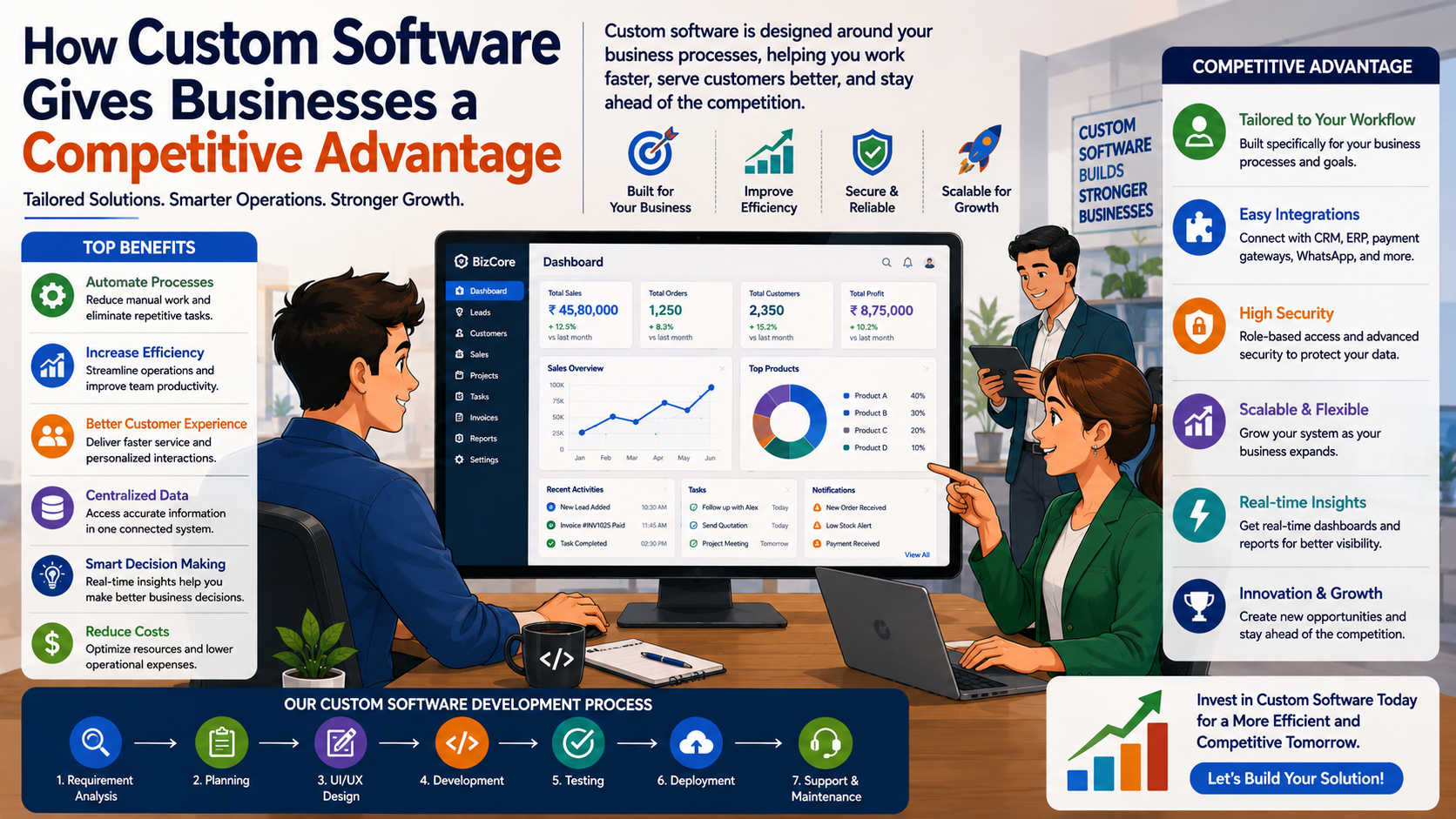
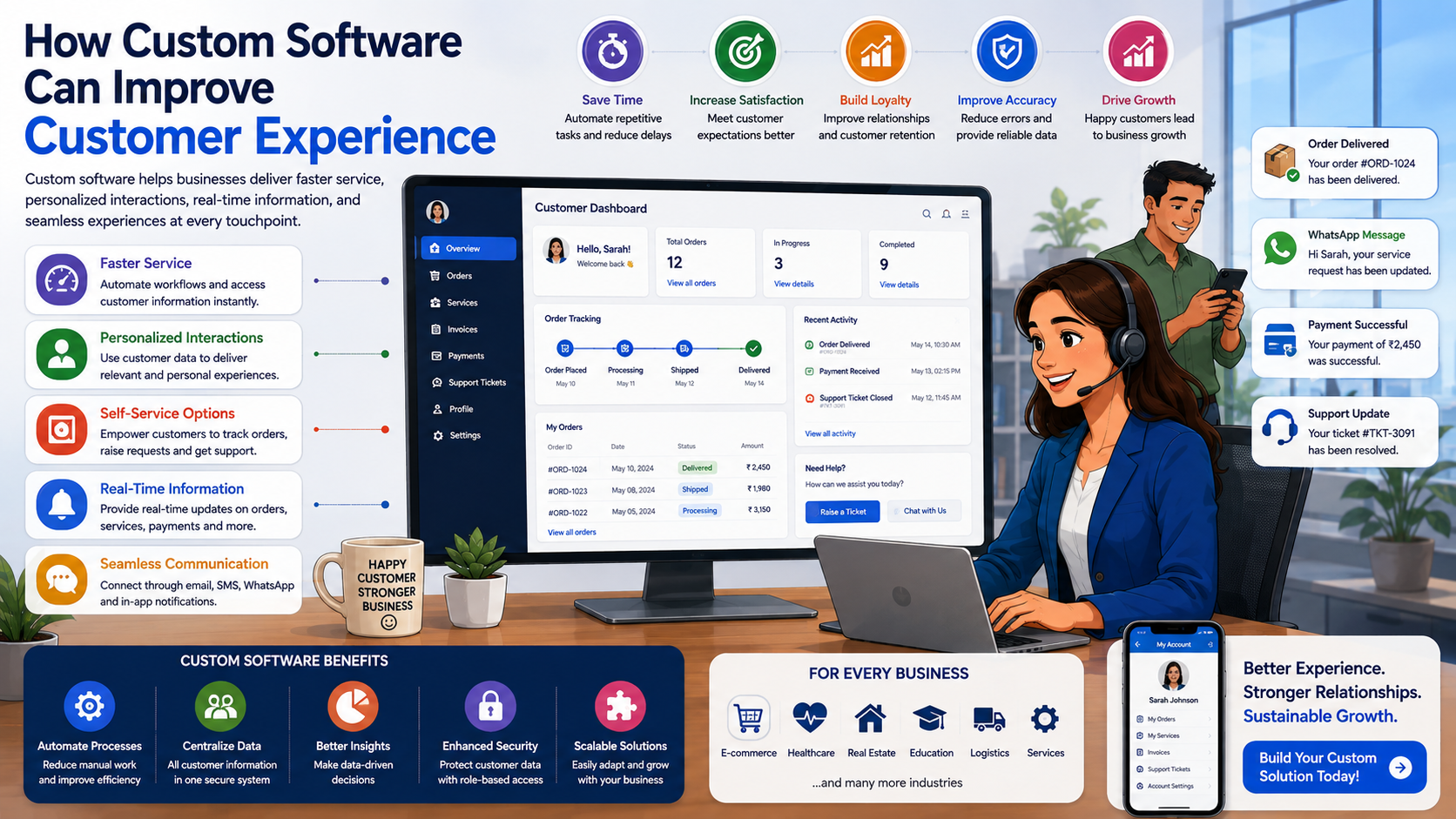
Customer expectations are changing rapidly. People want faster responses, convenient services, personalized interactions, and easy access to information. Businesses that continue to rely on manual processes and disconnected systems may find it difficult to deliver the level of service customers expect.
Custom software development can help businesses create digital solutions specifically around their customers, services, and internal processes. From personalized customer portals and automated notifications to faster support and real-time information, custom software can improve the overall customer experience.
At Mugin Technologies, we develop custom software solutions that help businesses streamline operations while creating smoother and more convenient experiences for their customers.
What Is Custom Software?
Custom software is a software application developed specifically for the requirements of a particular business.
Unlike generic software, custom solutions can be designed around:
· Business processes
· Customer requirements
· Industry-specific workflows
· Products and services
· Employee operations
· Customer communication
· Business integrations
This flexibility allows businesses to create customer experiences that match their specific goals.
Why Customer Experience Matters
Customer experience includes every interaction a customer has with your business.
It can involve:
Website Visit → Enquiry → Communication → Purchase → Delivery → Support → Follow-up
If any part of this journey is slow or difficult, it can affect customer satisfaction.
Custom software can help businesses improve different stages of this journey by making processes faster, more convenient, and more personalized.
How Custom Software Improves Customer Experience
1. Provides Faster Customer Service
Customers don't want to wait unnecessarily for basic information or support.
Custom software can automate many customer service processes and help employees access customer information quickly.
For example, a support team can view:
· Customer details
· Previous interactions
· Orders
· Service requests
· Payment information
· Support history
Having this information in one place can help employees respond more efficiently.
2. Enables Personalized Customer Interactions
Customers appreciate experiences that are relevant to their needs.
Custom software can use available customer information to provide personalized experiences.
For example, a system can display:
· Previous purchases
· Relevant products
· Service history
· Personalized offers
· Recommended services
· Customer-specific information
Personalization can help businesses create stronger relationships with their customers.
3. Creates Self-Service Options
Customers increasingly prefer to complete simple tasks themselves rather than contacting support for every request.
Custom software can provide customer portals where users can:
· View orders
· Download invoices
· Track requests
· Update information
· Submit support tickets
· Make payments
· Check service status
Self-service features can save time for both customers and employees.
4. Improves Response Time
Slow responses can negatively affect customer satisfaction.
Custom software can automate notifications and workflows to ensure that important customer requests are handled promptly.
For example:
Customer Enquiry → Automatic Assignment → Team Notification → Follow-up → Customer Update
This reduces the possibility of enquiries being forgotten or delayed.
5. Provides Real-Time Information
Customers often want immediate information about their orders, services, payments, or requests.
Custom software can provide real-time or near-real-time information through dashboards and customer portals.
Customers may be able to check:
· Order status
· Delivery status
· Payment status
· Appointment details
· Service requests
· Account information
Providing information directly to customers can reduce unnecessary calls and messages.
6. Makes Communication Easier
Businesses communicate with customers through multiple channels.
Custom software can integrate communication tools such as:
· SMS
· Website forms
· Notifications
· Customer portals
Centralizing communication can help businesses manage customer interactions more efficiently.
7. Reduces Repetitive Customer Requests
Many businesses receive repeated questions such as:
· "What is my order status?"
· "Has my payment been received?"
· "When will my service be completed?"
· "Can I download my invoice?"
· "What is the status of my request?"
Custom software can provide customers with direct access to this information.
This reduces repetitive enquiries and allows support teams to focus on more complex customer requirements.
8. Improves Order and Service Tracking
For businesses that handle orders or service requests, tracking can be an important part of customer experience.
A custom system can allow customers to follow progress through different stages.
For example:
Order Received → Processing → Packed → Shipped → Delivered
Similarly, service businesses can provide:
Request Received → Assigned → In Progress → Completed
Customers have greater visibility into what is happening without having to contact the business repeatedly.
9. Simplifies Payments
Payment processes should be simple and convenient.
Custom software can integrate with suitable payment gateways and allow customers to:
· Make payments
· View payment status
· Download receipts
· Check invoices
· Receive payment notifications
A smoother payment experience can reduce friction during the customer journey.
10. Improves Customer Support
Customer support teams can benefit significantly from centralized customer information.
A custom support system can provide:
· Ticket management
· Customer history
· Priority management
· Automated notifications
· Staff assignment
· Status tracking
· Support reports
This allows support teams to organize requests and provide more consistent service.
11. Creates Consistent Customer Experiences
Customers may interact with different employees or departments.
Without a centralized system, different teams may have different information about the same customer.
Custom software can provide a common source of information for authorized employees.
For example:
Sales → Customer Service → Accounts → Management
can work with connected customer information.
This helps create a more consistent customer experience across departments.
12. Helps Businesses Understand Customer Needs
Customer data can provide valuable insights into behavior and preferences.
Custom software can generate reports and dashboards showing:
· Customer activity
· Purchase history
· Service usage
· Support requests
· Feedback
· Sales patterns
Businesses can use these insights to identify areas where customer experience can be improved.
13. Supports Loyalty and Retention
Customer experience plays an important role in encouraging customers to return.
Custom software can support customer retention through features such as:
· Loyalty programs
· Personalized offers
· Automated follow-ups
· Customer reminders
· Membership systems
· Service notifications
These features can help businesses maintain ongoing relationships with their customers.
Custom Software vs. Generic Software for Customer Experience
| Custom Software | Generic Software |
| Designed around your customers and processes | Designed for broad requirements |
| Personalized workflows | Standard workflows |
| Custom customer portals | Features depend on the platform |
| Flexible integrations | Integration options vary |
| Custom reports and dashboards | Standard reports |
| Can evolve with your business | Changes depend on vendor capabilities |
Generic software can be effective when its existing features meet your requirements. Custom software becomes useful when your customer journey requires specialized workflows, integrations, or functionality.
Signs Your Business Could Benefit From Custom Customer Software
Your business may benefit from a custom solution if:
· Customers frequently ask for order or service updates
· Your team manually responds to repetitive questions
· Customer information is stored across multiple systems
· Employees struggle to find customer history
· Customers cannot easily track requests
· Your support process is mostly manual
· You need personalized customer experiences
· Existing software does not match your workflow
· Multiple departments need access to customer information
At Mugin Technologies, we develop custom software solutions designed around business requirements and customer needs.
Our services include:
· Custom Software Development
· CRM Development
· Customer Portal Development
· Web Application Development
· Mobile Application Development
· Business Process Automation
· ERP Development
· SaaS Application Development
· API Integration
· Dashboard and Reporting Solutions
· Software Maintenance and Support
We focus on creating secure, scalable, user-friendly, and business-focused software that helps organizations improve their operations and customer relationships.
Customer experience can have a significant impact on customer satisfaction, loyalty, and business growth. Custom software provides businesses with the flexibility to design digital experiences around their specific customers and processes.